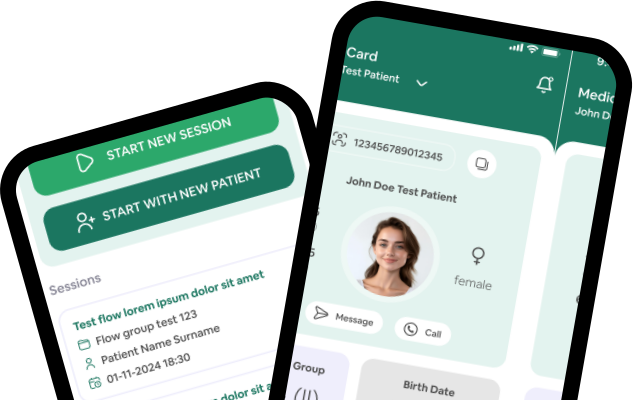
Differential Diagnosis Module
Simplifying one of medicine’s most complex processes.
The Differential Diagnosis Module supports clinicians in one of the most critical and cognitively demanding aspects of medical practice — the diagnostic reasoning process. Drawing upon current international guidelines and evidence-based recommendations, this module assists physicians in efficiently narrowing diagnostic possibilities, improving both accuracy and clinical confidence.
By integrating structured algorithms and symptom-based logic, the module enables healthcare professionals to rapidly identify red flags, prioritize urgent conditions, and refine diagnostic hypotheses across a wide range of clinical scenarios.
Developed within the IAZAMED clinical support platform, it enhances the precision and safety of diagnostic decision-making, while streamlining documentation and reducing cognitive workload.
Sources and Methodological Basis
The development of this clinical decision support system was grounded exclusively in publicly available clinical information from authoritative medical guidelines, protocols, and recommendations issued by recognized international and national healthcare organizations and professional societies.
In constructing the program’s logic and algorithms, no copyrighted texts, tables, diagrams, or other proprietary materials were reproduced.
Only validated medical knowledge, diagnostic frameworks, and methodological principles — recognized as part of the shared professional domain — were utilized.
To ensure full transparency and traceability of the clinical evidence base, the complete list of reference sources used in the development of the Differential Diagnosis Module is provided below.
Differential Diagnosis — Source References
- Red Flags and Differential Diagnosis in Primary Care — Royal College of General Practitioners (RCGP), 2022.
- Guidelines for the Diagnosis of Infectious Causes of Common Symptoms — Infectious Diseases Society of America (IDSA), 2022.
- Guidelines for Imaging in Acute Abdominal Pain / Flank Pain — American College of Radiology (ACR), 2022.
- Approach to Hyperglycemia and Undifferentiated Metabolic Complaints — American Diabetes Association (ADA), 2022.
- Symptom-Based Diagnostic Guides for Primary Care — Australian Therapeutic Guidelines (ATG) / Royal Australian College of General Practitioners (RACGP), 2022.
- Clinical Management of Severe Acute Respiratory Infection — World Health Organization (WHO), 2021.
- Evaluation and Management of Patients with Suspected Sepsis — Centers for Disease Control and Prevention (CDC), 2021.
- Guidelines on the Management of Cardiovascular Diseases (2019/2021) — European Society of Cardiology (ESC), 2021.
- Syncope and Arrhythmia Differential Diagnosis — ESC / European Heart Rhythm Association (EHRA), 2021.
- Diagnostic Approaches for Common Primary Care Complaints — Canadian Task Force on Preventive Health Care (CTF) / CMAJ, 2021.
- Differential Diagnosis in Inflammatory Musculoskeletal Pain — European Alliance of Associations for Rheumatology (EULAR), 2021.
- Heart Failure Diagnostic Algorithms — ESC / European Association for Cardio-Thoracic Surgery (EACTS), 2021.
- Screening and Diagnostic Recommendations that Inform Differential — U.S. Preventive Services Task Force (USPSTF), 2021.
- Guidelines for Acute Stroke Assessment — European Stroke Organisation (ESO), 2021.
- Clinical Policy Statements for Undifferentiated Complaints — American College of Emergency Physicians (ACEP), 2021.
- Differential Diagnosis of Suspected Meningitis / Encephalitis — European Centre for Disease Prevention and Control (ECDC) / WHO, 2021.
- Guidelines on Undifferentiated Chest Pain, Abdominal Pain, and Altered Mental Status in the ED — European Society for Emergency Medicine (EuSEM), 2021.
- Diagnostic Frameworks for Palpitations, Syncope, and Chest Pain — National Heart Foundation / Cardiac Society (NHF/CS), 2021.
Practice with Confidence Join Iazamed today!
Join thousands of healthcare professionals using IAZAMED for smarter, evidence-based solutions.